

Macaronic Poetry for Pentecost

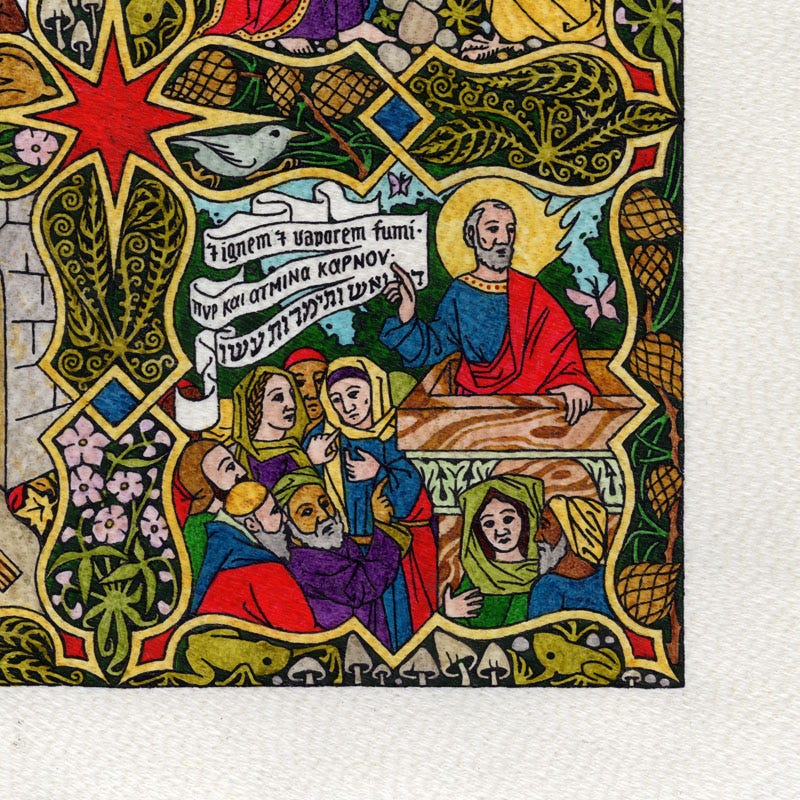
The heart of my second poetry collection, The Gustable God, is a series of seven hymns and carols for Pentecost, each of them using either phrases from, or poetic forms associated with, a different language. I first had the idea for this series long ago; as an admirer of medieval macaronic carols, I had some experience writing in a combination of English and Latin. I wanted to attempt macaronic verse in other languages, as a reference to the gift of tongues given to the Apostles at Pentecost.
The gift of tongues represents a reversal of the confusion at the tower of Babel — an event that I believe divided mankind not only into different tongues, but different nations, mythologies, and philosophies as well. I wanted each of the poems in my series to invoke a different wisdom tradition, and use it to praise the Holy Ghost.
The languages I chose were Classical Chinese, Persian, Nahuatl, Latin, Ancient Egyptian, Greek, and Lingua Ignota (a constructed language invented by Hildegard of Bingen). These poems reference the words and thought of Confucius, Hafez of Shiraz, Nezahualcoyotl, Ovid, Akhenaten, and Plato, among others. Writing them gave me to opportunity to write in poetic forms new to me, such as the ghazal and sapphic ode, and to try my hand at drawing hieroglyphs and writing calligraphy in Chinese and Arabic script.
Here are three of the poems, with their explanatory notes:
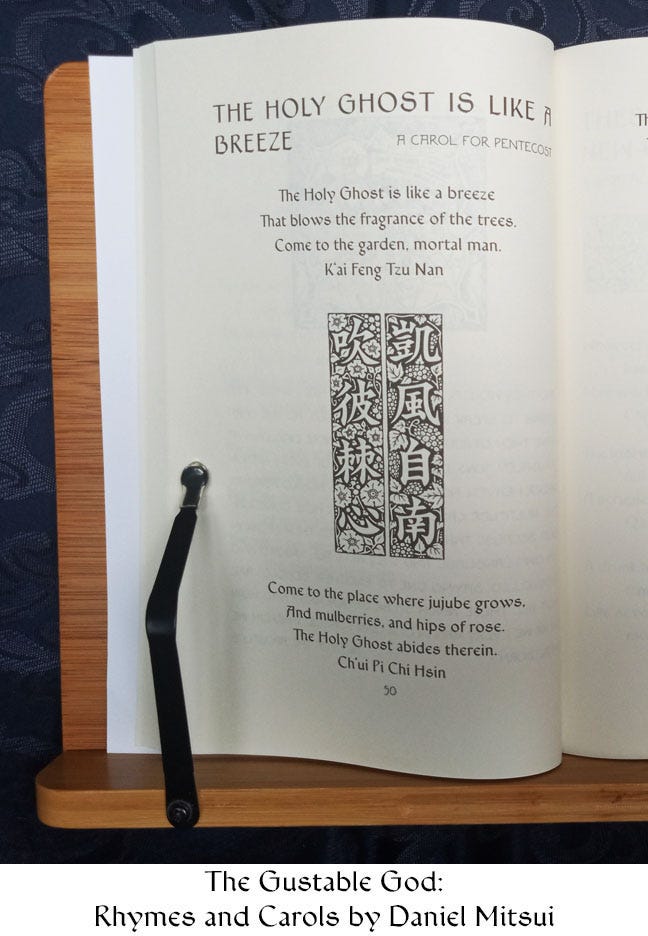
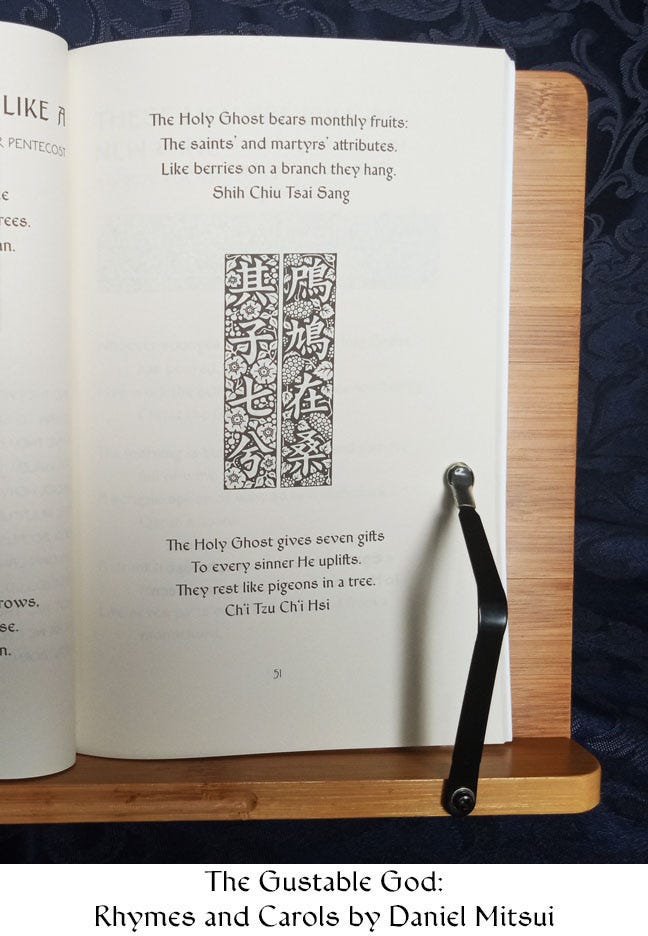
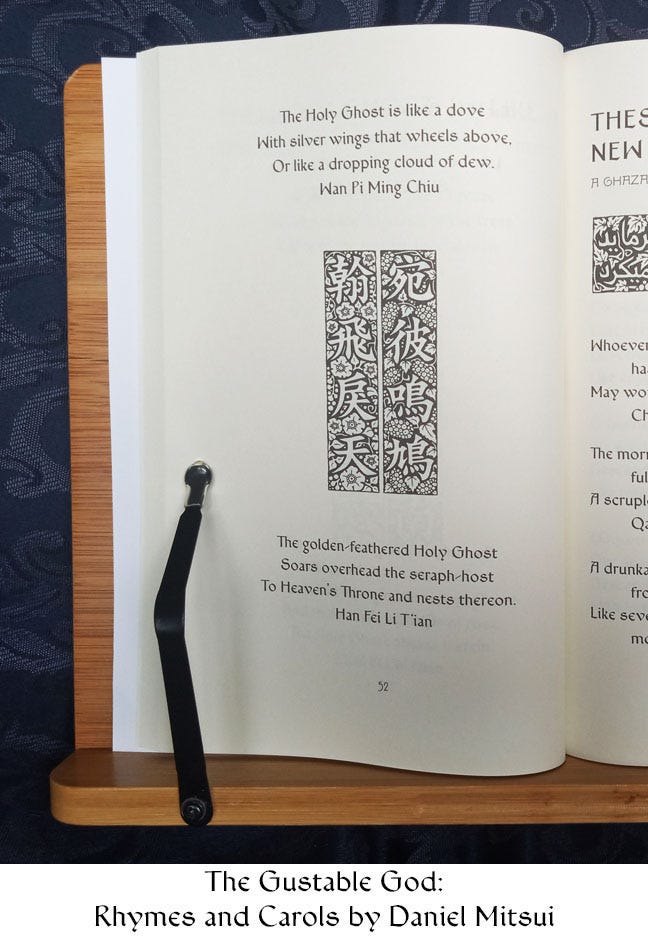
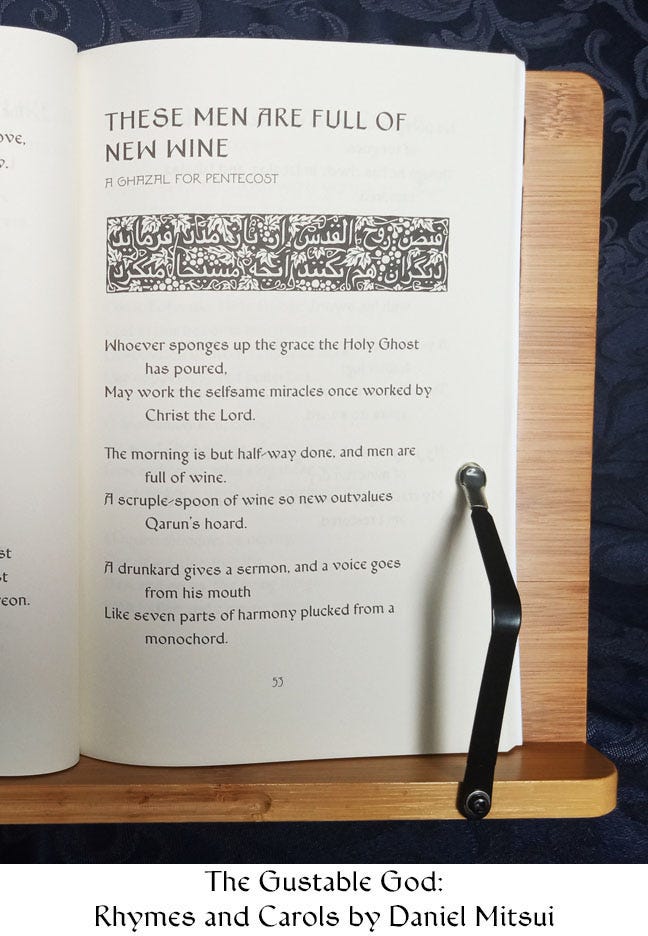
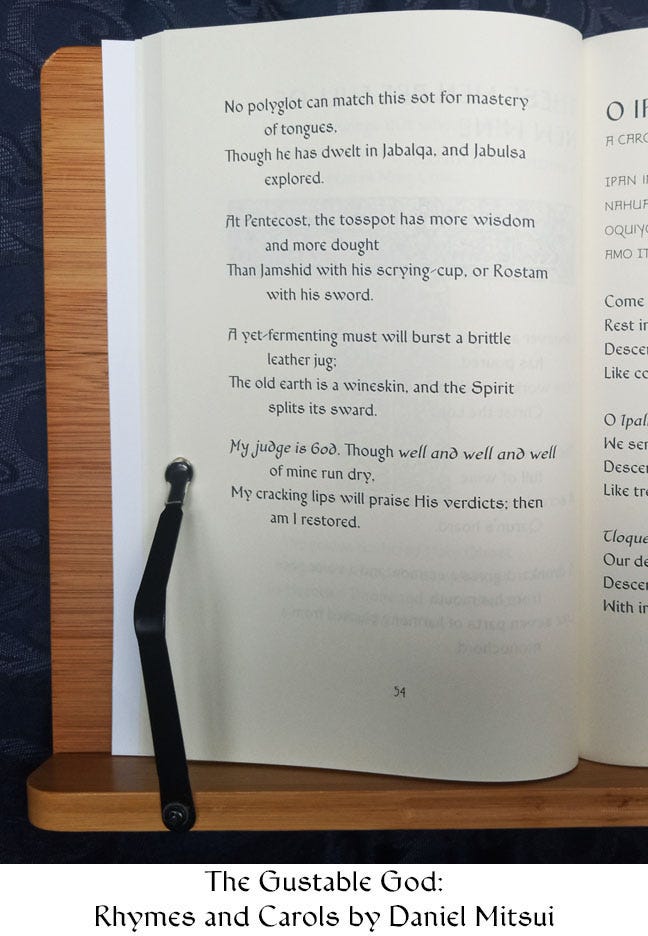
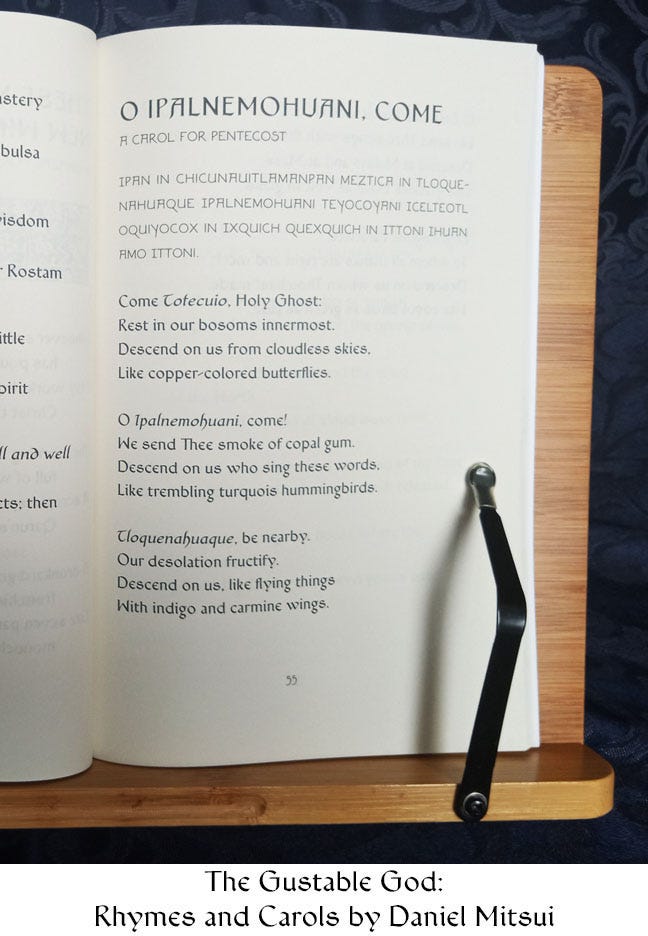
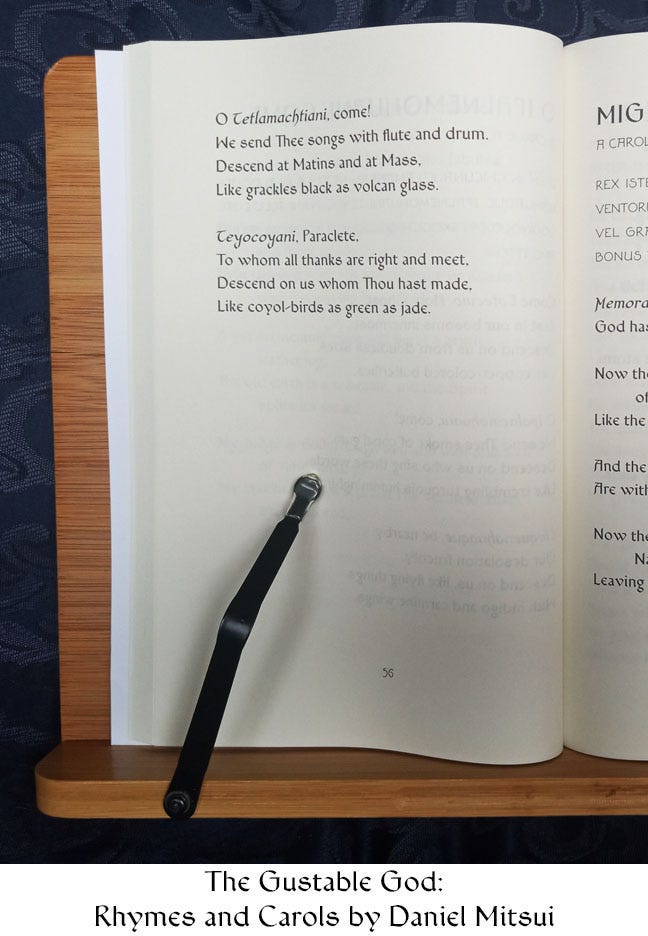
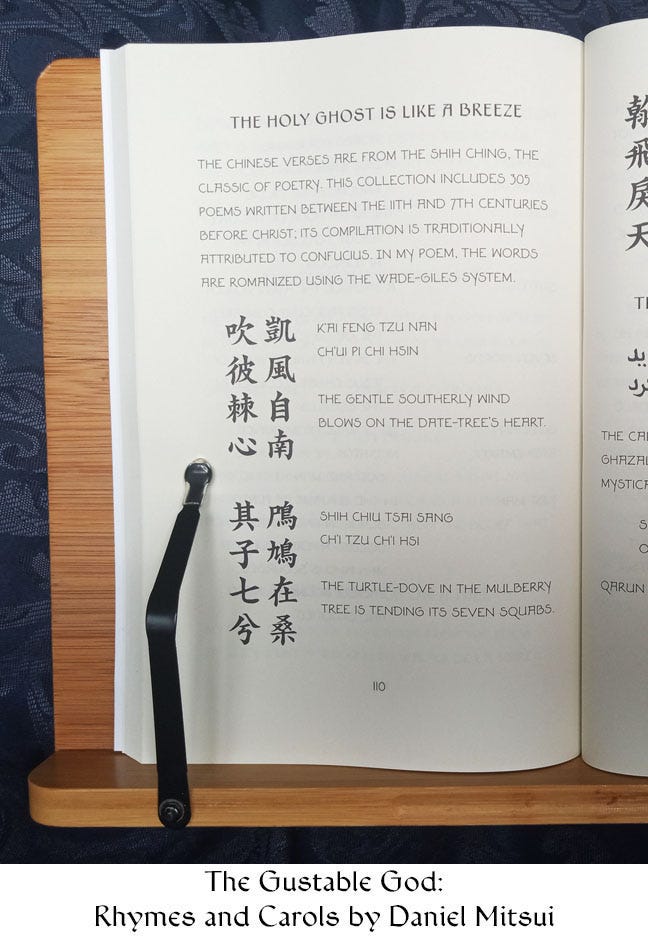
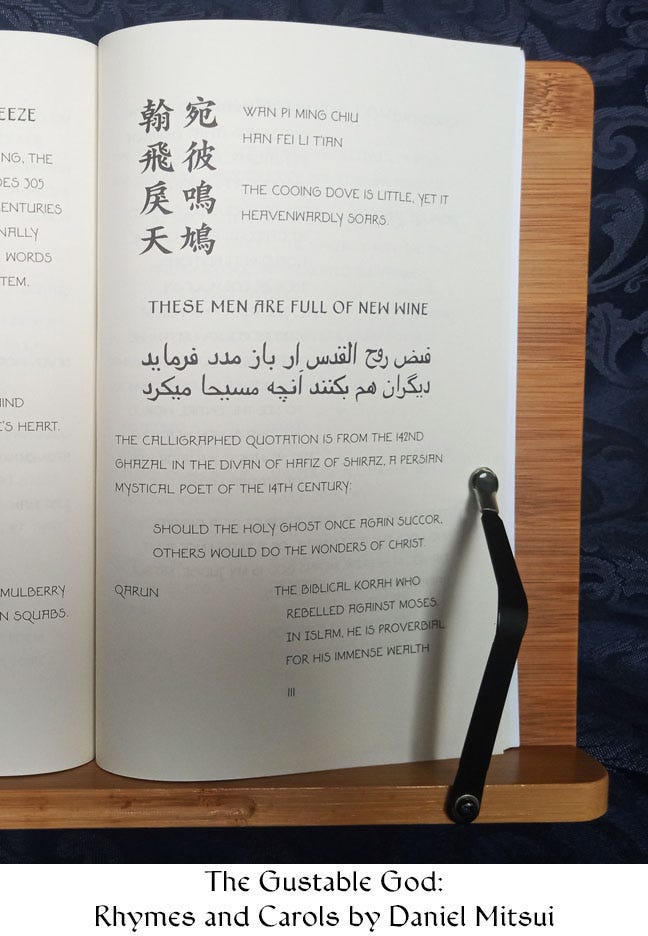
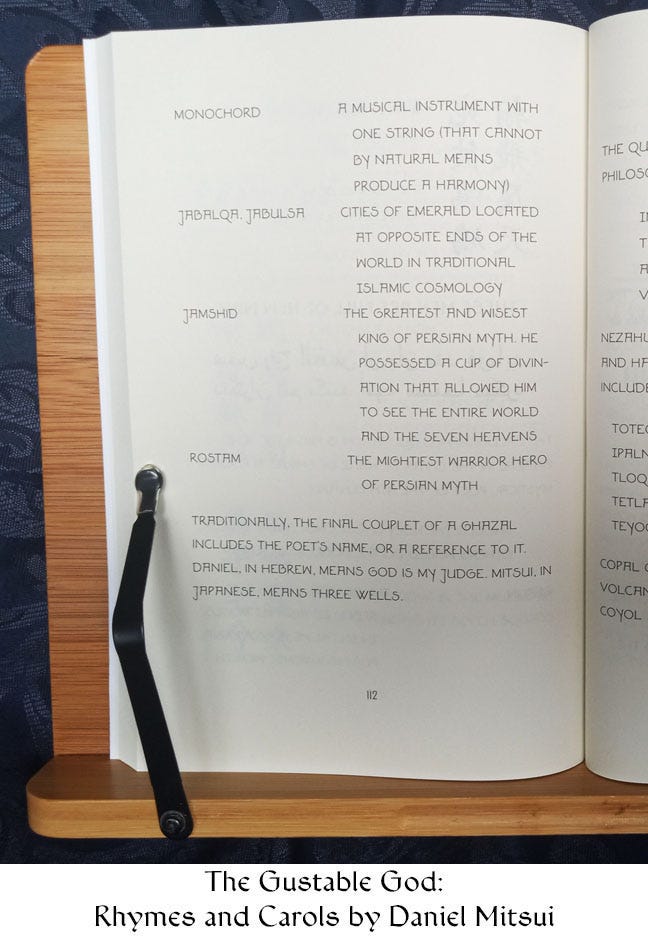
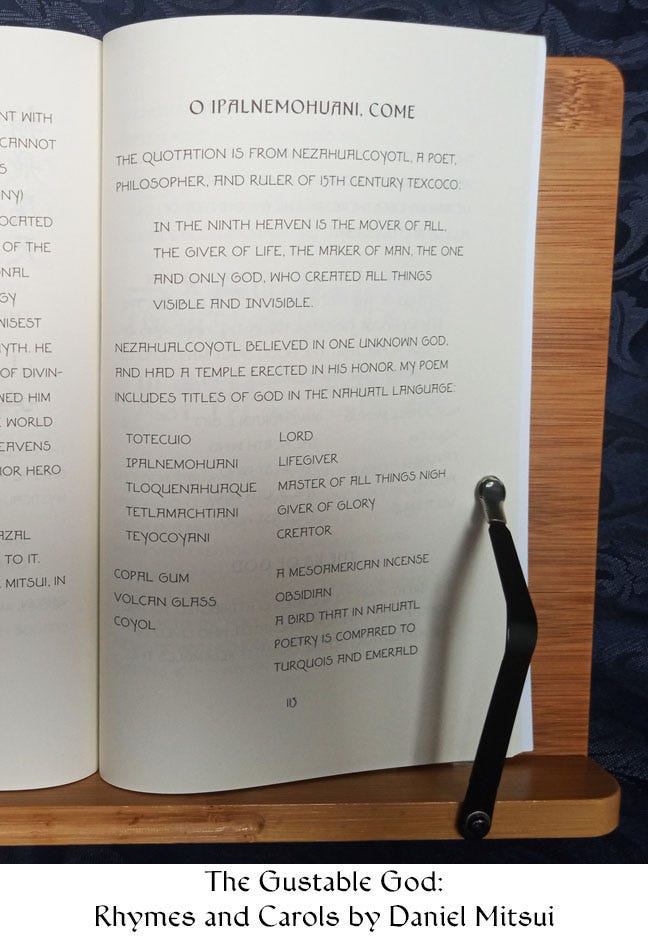
This book is available at my website here, or through Amazon. It includes forty religious poems that I wrote, illustrated with my own drawings, and set in my own typefaces.

Some of the original calligraphy I made for this book is available here:


